Description
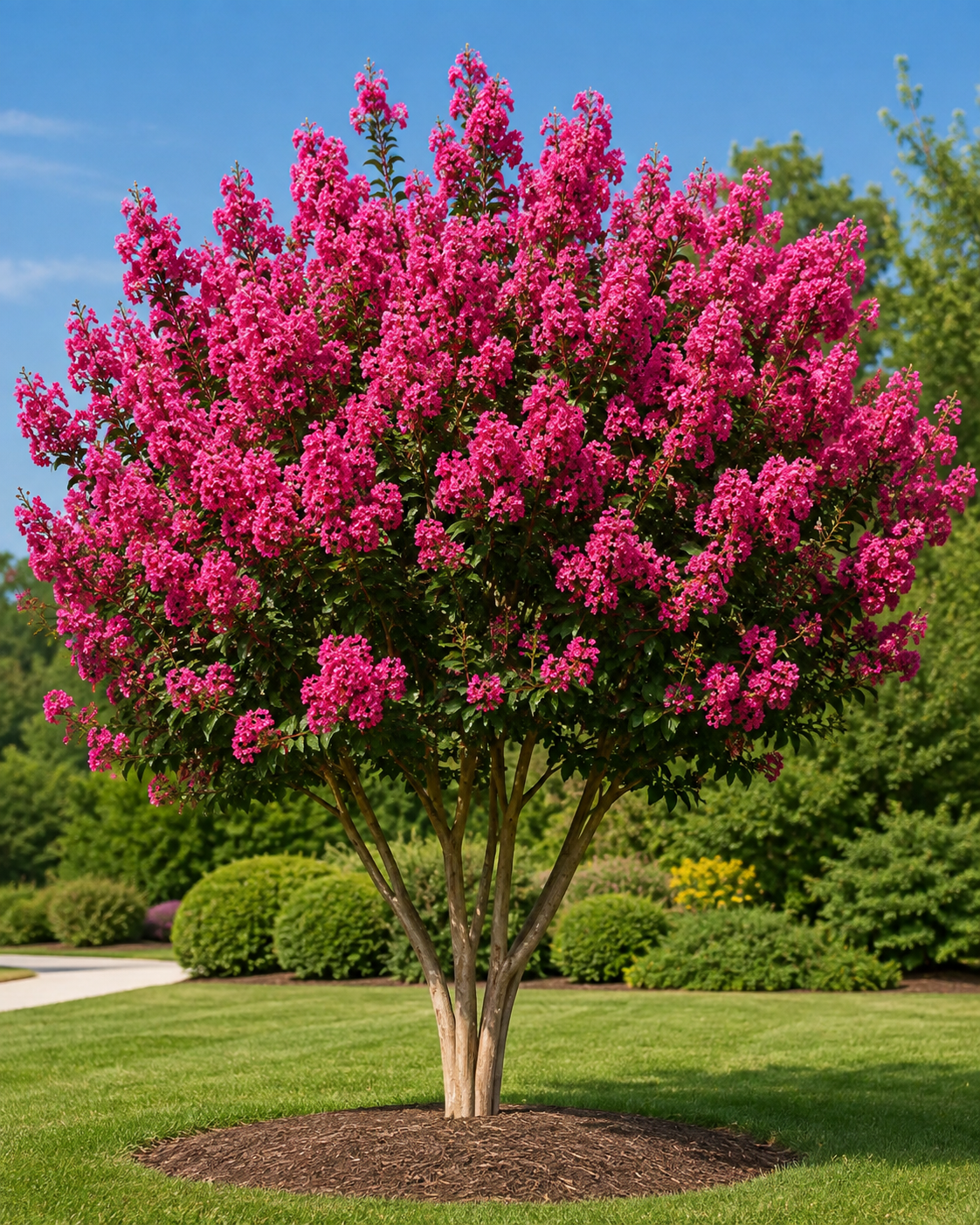
Elevate your garden landscape with the enchanting Queen Crape Myrtle (Lagerstroemia speciosa), available at MoneyPlant.pk. Known locally in Pakistan as Gul-e-Fanoos or Jarul, this medium-to-large deciduous tree produces long clusters of brilliant lilac, purple, and deep pink blossoms that light up outdoor spaces from late spring through late summer.
Unlike smaller shrub-style crape myrtles, the Queen Crape Myrtle matures into a sturdy shade tree with smooth grey bark, large oval leaves, and a clean symmetrical canopy. Its delicate, crinkled petals resemble ruffled tissue paper, earning it a spot among the most prized Flowering Trees in Pakistan.
Ideal Growing Conditions in Pakistan
Queen Crape Myrtle thrives effortlessly in the hot, sunny climate of Pakistani cities like Lahore, Karachi, Rawalpindi, and Multan. It stands up to extreme summer temperatures and flourishes under direct sunlight.
Indoor vs. Outdoor Suitability
-
Outdoor Plants in Pakistan: This plant grows best as an outdoor landscape centerpiece, street tree, or lawn lawn specimen where it can soak up maximum sunlight.
-
Potted / Patio Placement: Younger saplings can be grown on bright, sunny rooftops or open patios in large pots before transferring them to ground soil.
When you buy plants online from MoneyPlant.pk, you skip the hassle of visiting a physical plant nursery near me. Our nursery experts handpick healthy, root-established trees and package them safely to ensure they arrive fresh at your doorstep anywhere in Pakistan.
Plant Care Instructions
-
Light: Thrives in 6 to 8 hours of daily full sunlight. Ample sun exposure produces denser foliage and richer blooms.
-
Water: Water regularly during the establishing phase. Once mature, it withstands moderate heat; maintain weekly deep watering during peak Pakistani summers.
-
Soil: Prefers well-draining sandy loam or alluvial soil rich in organic matter. Avoid waterlogged conditions.
-
Temperature: Excellent tolerance for Pakistani summer heat (30°C to 45°C+). Protect young saplings during severe winter frosts.
-
Fertilizer: Feed with balanced organic compost or slow-release NPK fertilizer in early spring right before fresh green growth appears.




Reviews
There are no reviews yet.